
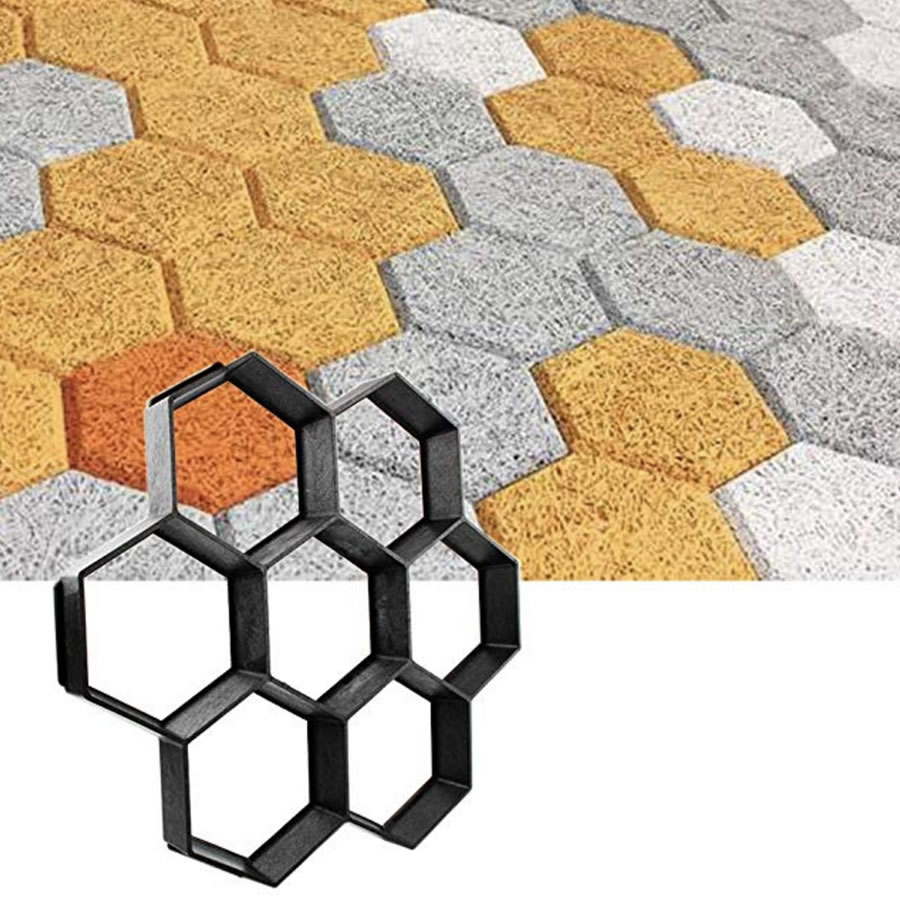


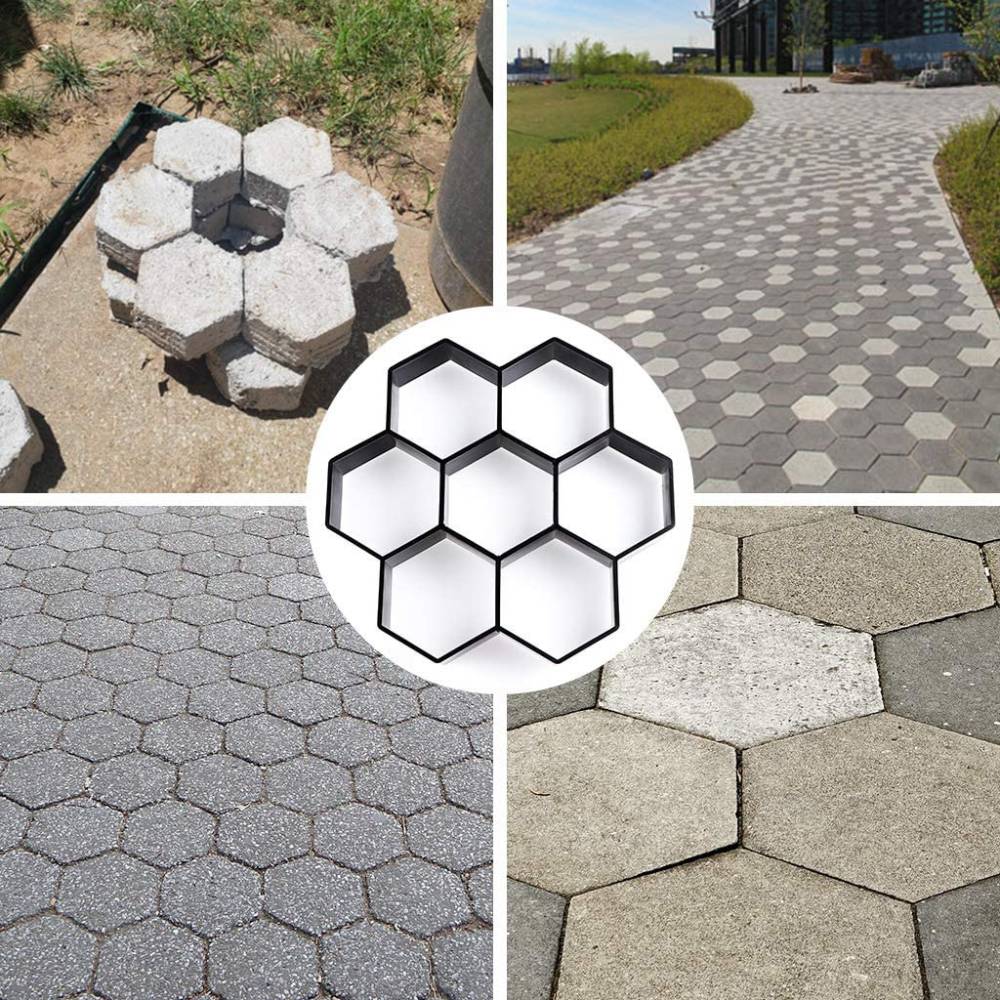
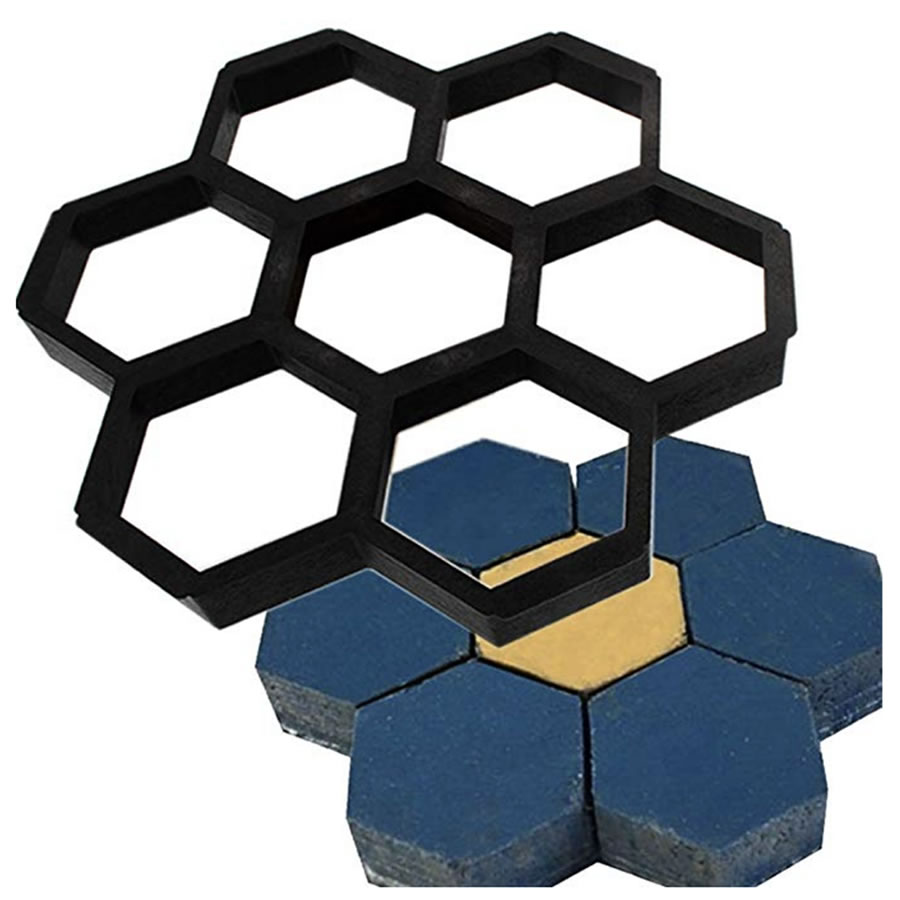
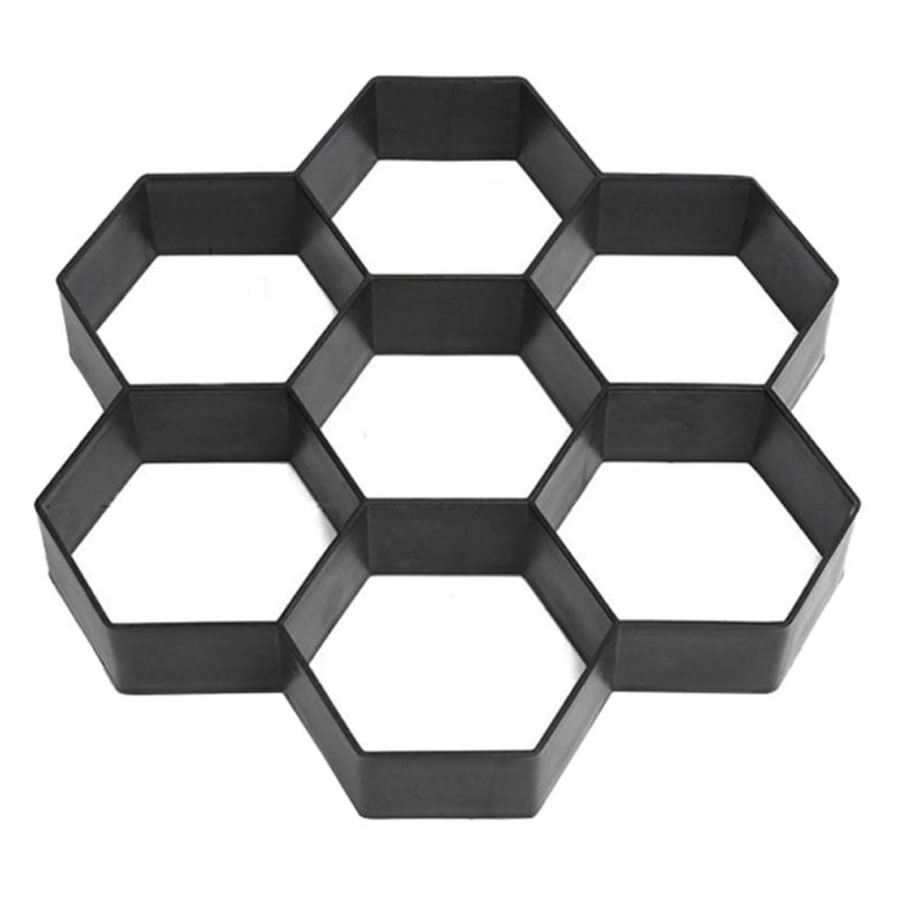
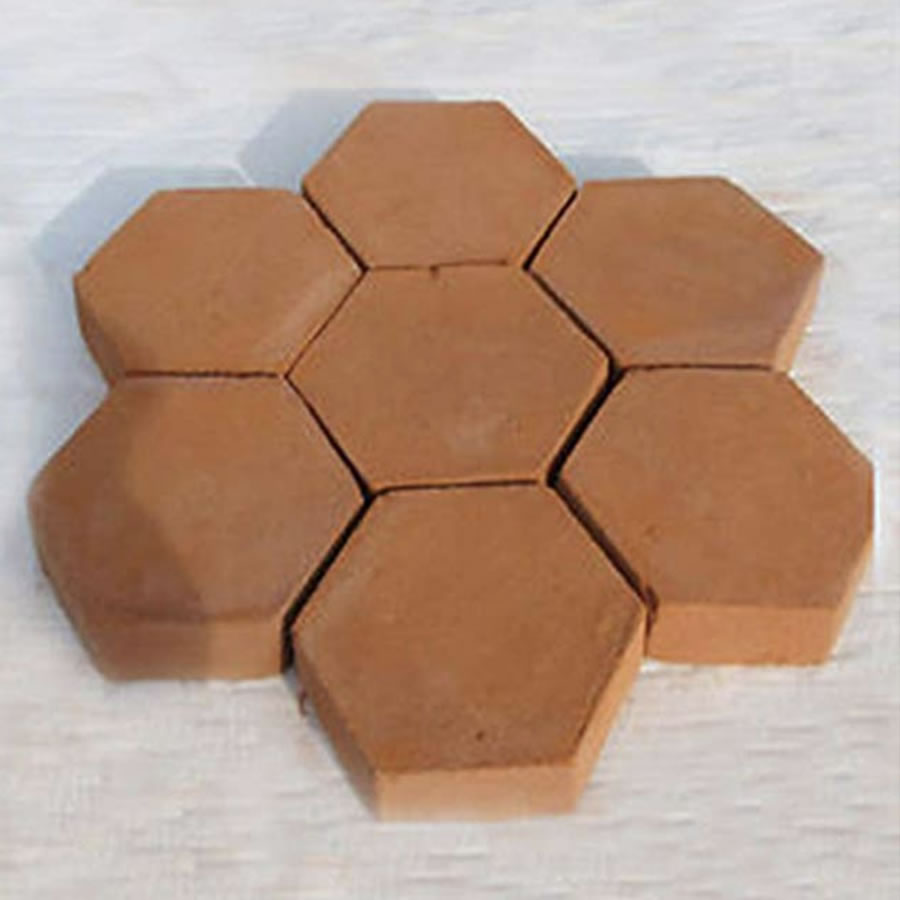
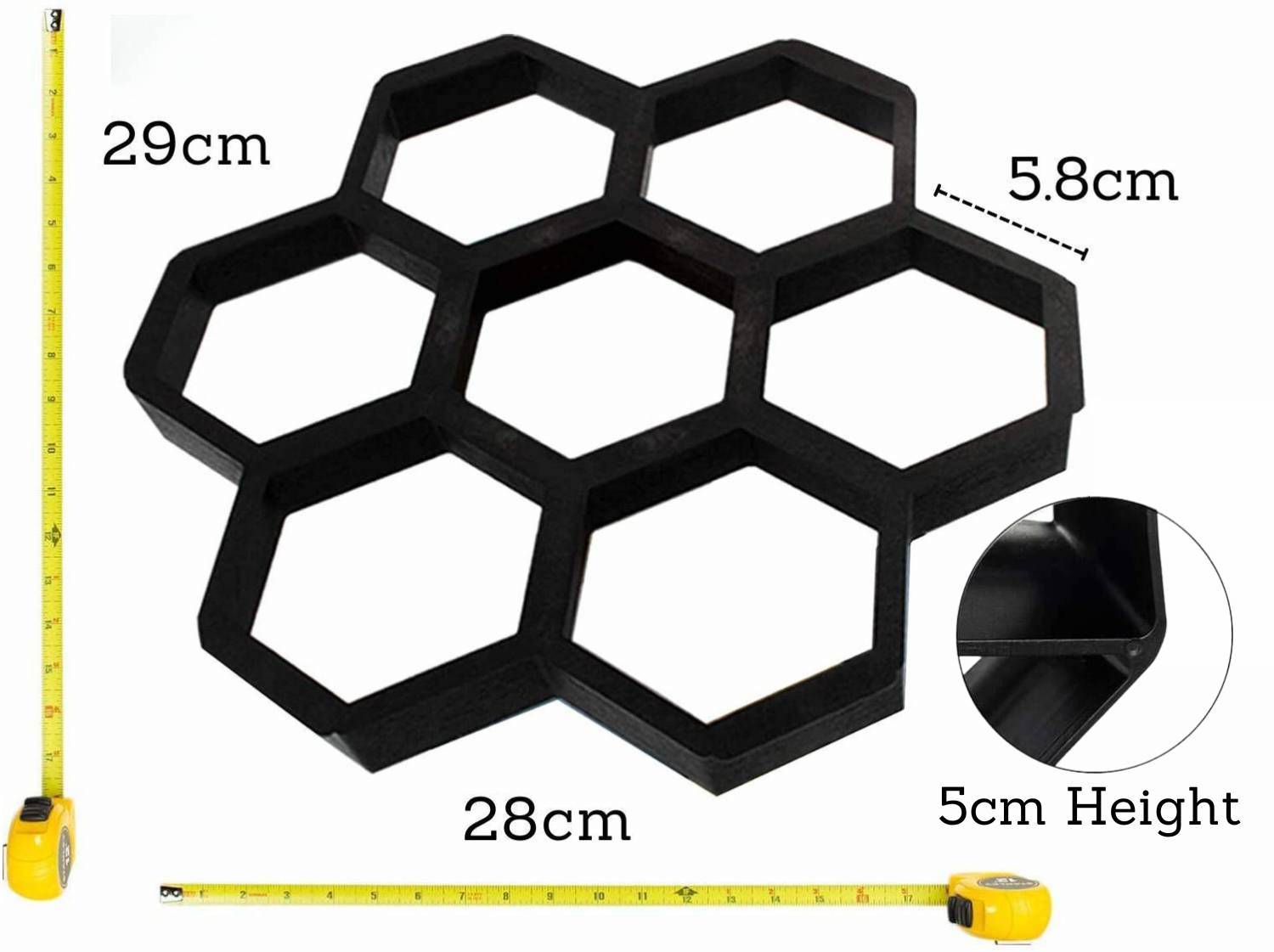


The complete guide
Create Stunning Honeycomb Patterns: The Ultimate Guide to Hexagon Paving Moulds and Geometric Garden Design
Have you ever wondered why hexagons appear everywhere in nature, from honeybee combs to snowflake crystals? There's something deeply satisfying about this six-sided shape that speaks to our innate appreciation for geometric perfection. Now imagine bringing that same natural harmony to your outdoor spaces through the magic of hexagon paving moulds – tools that transform ordinary concrete into extraordinary geometric masterpieces that make your garden the talk of the neighborhood.
Think of a hexagon paving mould as your personal architect of geometric beauty, capable of creating patterns that seem to emerge naturally from mathematical principles yet feel surprisingly organic and welcoming. But here's what separates stunning hexagonal installations from disappointing attempts: understanding these specialized tools isn't just about pouring concrete into six-sided shapes and hoping for the best. It's about mastering the art of tessellation, color harmony, and spatial relationships to create outdoor surfaces that combine visual sophistication with timeless appeal.
Whether you're dreaming of a modern patio that showcases geometric precision, a garden pathway that guides visitors through your landscape like stepping stones across a stream, or an entire outdoor entertainment area that becomes a geometric work of art, hexagon moulds offer design possibilities that few other shapes can match. Let's dive into this fascinating world where mathematics meets creativity to transform your outdoor vision into reality.
The Geometric Psychology: Why Hexagons Captivate the Human Eye
Nature's Perfect Shape and Human Perception
Hexagons appear throughout nature because they represent optimal efficiency – the maximum area enclosed by the minimum perimeter. This mathematical perfection translates into visual appeal that humans instinctively recognize as "right" even if we can't articulate why. When you use a hexagon paving mould, you're tapping into billions of years of evolutionary programming that finds hexagonal patterns inherently pleasing and harmonious.
The six-sided symmetry of hexagons creates visual stability while offering enough complexity to maintain interest. Unlike squares that can appear rigid or circles that sometimes lack definition, hexagons strike the perfect balance between order and organic flow. This balance makes hexagonal paving suitable for both contemporary architectural settings and naturalistic landscape designs.
The interlocking nature of hexagonal tessellations creates patterns that extend infinitely without gaps or overlaps – a characteristic that makes large paved areas appear seamless and unified. This seamless quality eliminates the visual fragmentation that can occur with rectangular pavers while creating surfaces that seem to flow like geological formations.
Research in environmental psychology suggests that geometric patterns, particularly those found in nature, reduce stress and promote feelings of well-being. Hexagonal paving patterns can transform outdoor spaces into environments that not only look beautiful but actually make people feel more relaxed and connected to their surroundings.
Mathematical Beauty in Landscape Design
The mathematical relationships inherent in hexagonal geometry create opportunities for sophisticated design compositions that go beyond simple pattern repetition. Understanding these relationships enables creation of complex visual effects that transform ordinary paving into geometric art installations.
Hexagonal grids naturally create focal points at the intersections of three hexagons, providing obvious locations for accent colors, decorative elements, or functional features like lighting or drainage. These mathematical focal points eliminate guesswork in design composition while ensuring visually balanced results.
The six-fold symmetry of hexagons enables pattern variations that maintain geometric harmony while creating visual interest. Rotating alternate hexagons, varying colors in mathematical sequences, or incorporating size variations all work within hexagonal mathematics to create sophisticated design effects.
Scale relationships in hexagonal patterns follow mathematical progressions that create natural hierarchies of visual importance. Understanding these relationships enables designers to create patterns that guide the eye naturally while maintaining overall geometric harmony.
Understanding Hexagon Concrete Paver Moulds: Engineering Meets Art
Material Science and Manufacturing Precision
Creating quality hexagon concrete paver moulds requires sophisticated engineering that balances flexibility, durability, and precision manufacturing tolerances. The six-sided geometry demands exceptional accuracy because small dimensional errors multiply across tessellated patterns, creating visual disruptions that compromise the geometric perfection that makes hexagonal patterns so appealing.
The plastic formulations used in quality moulds must maintain dimensional stability under concrete pressure while remaining flexible enough to enable easy demolding. This balance requires specialized polymer chemistry that optimizes molecular structure for concrete molding applications. Inferior plastics may flex excessively under pressure, creating dimensional variations that prevent proper tessellation.
Surface finish engineering ensures that mould interiors reproduce desired textures while releasing easily from cured concrete. The surface treatments applied during manufacturing affect both the appearance of finished pavers and the longevity of the mould itself. Quality surface treatments enhance detail reproduction while extending mould service life.
Wall thickness optimization represents a critical design parameter that affects both mould performance and longevity. Thin walls reduce material costs but may flex excessively or fail prematurely. Thick walls provide strength but may make demolding difficult. Quality manufacturers optimize wall thickness for each specific design to ensure optimal performance characteristics.
Precision Engineering for Perfect Tessellation
The geometric requirements of hexagonal tessellation demand manufacturing tolerances that exceed those required for simpler shapes. Each hexagon must maintain precise angles and dimensions to ensure perfect fit with adjacent pieces across large installations. Small manufacturing variations that might be acceptable in rectangular pavers can create significant problems in hexagonal patterns.
Angle accuracy becomes particularly critical because hexagonal tessellation requires precise 120-degree angles at each vertex. Variations of even a few degrees can accumulate across patterns, creating gaps or overlaps that disrupt visual continuity and may cause structural problems during installation.
Edge straightness and smoothness affect how well adjacent hexagons fit together while influencing the visual quality of joint lines. Quality moulds maintain edge precision throughout their service lives, ensuring consistent results across hundreds of molding cycles.
Corner radius specifications must be carefully controlled to ensure consistent joint appearance and proper interlocking between adjacent pavers. Too sharp corners may chip during demolding, while excessive radius creates gaps that compromise visual continuity.
Types and Variations of Hexagon Stepping Stone Molds
Classic Regular Hexagons
Classic regular hexagon stepping stone molds create the fundamental six-sided shapes that form the basis for traditional hexagonal tessellations. These standard hexagons offer maximum design flexibility while providing the visual harmony that makes hexagonal patterns so universally appealing.
Standard sizing in hexagon stepping stone molds typically ranges from 8 inches to 16 inches across the widest dimension, providing options for different scale applications and aesthetic preferences. Smaller hexagons create more detailed patterns with more joints, while larger hexagons provide bolder visual impact with fewer interruptions.
Thickness variations enable different applications from thin decorative overlays to structural pavers capable of supporting vehicular traffic. Standard thickness ranges from 1.5 inches for pedestrian applications to 3 inches or more for heavy-duty installations.
Edge treatments can vary from sharp contemporary lines to slightly rounded edges that soften the geometric severity and create more natural appearances. The choice of edge treatment significantly affects the overall character of finished installations.
Extended and Modified Hexagonal Shapes
Extended hexagonal designs stretch traditional proportions to create elongated hexagons that offer different design possibilities while maintaining the essential character of hexagonal geometry. These variations enable unique pattern combinations that distinguish projects from standard hexagonal installations.
Truncated hexagons remove corners to create eight-sided shapes that tessellate differently from regular hexagons. These shapes can be combined with regular hexagons or used independently to create complex geometric patterns that maintain mathematical harmony.
Nested hexagon designs incorporate smaller hexagons within larger ones, creating patterns with multiple scales of detail that add visual complexity while maintaining geometric order. These designs require precise manufacturing to ensure proper proportional relationships.
Interlocking variations modify basic hexagonal shapes to include tabs and slots that create mechanical connections between adjacent pavers. These features provide enhanced stability while maintaining the visual appeal of hexagonal patterns.
Artistic and Contemporary Variations
Contemporary hexagon mould designs push traditional geometric boundaries while maintaining the essential mathematical relationships that make hexagonal patterns so visually compelling. These artistic variations enable unique installations that stand out from conventional geometric paving.
Textural variations incorporate surface treatments that add tactile and visual interest while maintaining the clean lines of hexagonal geometry. These textures might simulate natural materials, create artistic patterns, or provide functional benefits like enhanced slip resistance.
Integrated pattern elements might include decorative inlays, color variations, or relief patterns that transform basic hexagons into artistic statement pieces. These elements require careful design integration to maintain overall geometric harmony.
Three-dimensional variations create hexagons with raised or recessed areas that add sculptural interest while maintaining functional performance. These variations require sophisticated mould design to ensure proper concrete flow and demolding characteristics.
The Top 8 Creative Applications for Hexagon Paving Moulds
Hexagonal paving opens up a world of creative possibilities that extend far beyond simple walkways and patios. Understanding these applications helps you appreciate the versatility and potential of hexagonal geometry in landscape design.
1. Modern Patio Installations
Hexagonal pavers create contemporary outdoor living spaces that feel both sophisticated and welcoming. The geometric precision appeals to modern architectural sensibilities while the organic tessellation pattern prevents the sterile feeling that can plague strictly rectangular layouts. Large format hexagons work particularly well for entertainment areas where you want clean lines with visual interest.
2. Garden Pathway Systems
Hexagonal stepping stones create pathways that feel both planned and natural. The organic flow of hexagonal patterns guides visitors through gardens while the mathematical precision ensures accessibility and safety. Varying sizes or colors can create rhythm and emphasis along pathway routes.
3. Pool Deck and Water Feature Surrounds
The geometric beauty of hexagonal patterns complements the flowing lines of pools and water features while providing practical slip resistance and drainage capabilities. Hexagonal patterns can unify complex pool shapes while creating visual interest that doesn't compete with water reflections.
4. Driveway and Entry Statements
Hexagonal pavers create memorable first impressions through geometric sophistication that speaks to attention to detail and design consciousness. The structural strength of properly interlocked hexagonal patterns supports vehicular traffic while creating distinctive entry experiences.
5. Courtyard and Intimate Space Design
Small enclosed spaces benefit from hexagonal patterns that create visual expansion through infinite tessellation patterns. The geometric sophistication prevents small spaces from feeling boring while the organic flow maintains intimacy and comfort.
6. Commercial and Public Space Applications
The visual appeal and structural performance of hexagonal patterns make them ideal for commercial applications where aesthetic impact and durability matter equally. The unique appearance distinguishes commercial properties while the proven performance satisfies practical requirements.
7. Artistic Installation and Accent Features
Hexagonal patterns can serve as artistic elements within larger landscape compositions. Strategic use of color, texture, or scale variations transforms functional paving into sculptural landscape features that create focal points and conversation starters.
8. Integration with Natural Landscapes
The organic feeling of hexagonal tessellations enables successful integration with natural landscape elements in ways that rigid geometric patterns cannot achieve. Hexagonal patterns can flow around existing trees, follow natural contours, or create transitions between built and natural environments.
Design Principles for Hexagonal Pattern Success
Scale and Proportion Relationships
Understanding scale relationships in hexagonal patterns enables creation of compositions that feel balanced and harmonious while serving their intended functions effectively. The mathematics of hexagonal geometry provides natural guidelines for scale selection that ensure visual success.
Large hexagons create bold statements that work well in expansive areas where viewing distances are significant. These large-scale patterns reduce visual complexity while creating strong geometric impact that complements contemporary architecture and open landscape designs.
Medium-scale hexagons provide versatility for most residential applications, offering enough detail to create visual interest while maintaining patterns that read clearly at typical viewing distances. These proportions work well for patios, walkways, and general outdoor living areas.
Small hexagons create intricate patterns with high detail levels that work best in intimate spaces where close viewing is possible. These fine-scale patterns can create jewel-like effects that transform small areas into special places worthy of careful attention.
Mixed scale compositions combine different hexagon sizes within coordinated design schemes that create visual hierarchy and complexity. These sophisticated compositions require careful planning but can create unique installations that showcase geometric design sophistication.
Color Theory in Hexagonal Design
Color selection and arrangement in hexagonal patterns can enhance geometric effects while creating emotional responses that support intended landscape functions. Understanding color relationships within hexagonal geometry enables sophisticated design effects that go beyond simple pattern repetition.
Monochromatic schemes emphasize geometric form by minimizing color distraction. These approaches work particularly well when hexagonal patterns serve as sophisticated background elements within larger landscape compositions. Subtle color variations can add depth without compromising geometric clarity.
Complementary color schemes can create dramatic effects by utilizing colors opposite on the color wheel. However, high contrast requires careful application within hexagonal patterns to prevent visual chaos that overwhelms rather than enhances outdoor spaces.
Analogous color progressions use neighboring colors to create gradual transitions that can guide movement or create focal points within hexagonal installations. These subtle progressions work particularly well in large installations where color changes can unfold gradually across the pattern.
Accent color integration uses strategic placement of contrasting colors to create focal points or emphasize specific areas within larger hexagonal installations. The mathematical focal points inherent in hexagonal geometry provide natural locations for accent placement.
Pattern Flow and Visual Movement
Hexagonal patterns naturally create visual movement through the eye's tendency to follow geometric progressions. Understanding and controlling this movement enables creation of patterns that guide attention and create desired visual effects within landscape compositions.
Directional emphasis can be created through color gradations, size progressions, or texture variations that encourage the eye to move in specific directions. This directional movement can guide visitors through spaces or draw attention to important landscape features.
Focal point creation utilizes the mathematical properties of hexagonal tessellation to create natural emphasis points within larger patterns. These focal points can incorporate special features, color changes, or decorative elements that add interest without disrupting overall pattern flow.
Rhythm and repetition within hexagonal patterns create visual music that makes spaces feel dynamic and alive. Understanding how to vary repetition patterns prevents monotony while maintaining the geometric harmony that makes hexagonal patterns so appealing.
Professional Installation Techniques for Hexagonal Patterns
Advanced Layout and Planning Strategies
Successful hexagonal pattern installation requires sophisticated planning that addresses the unique requirements of tessellated geometry. Unlike rectangular patterns that can accommodate minor adjustments easily, hexagonal patterns demand precise planning and execution to achieve professional results.
Grid establishment for hexagonal patterns requires understanding the mathematical relationships between individual hexagons and overall pattern geometry. These grids differ fundamentally from rectangular grids and require specialized layout techniques to ensure accuracy across large installations.
Pattern centering becomes critical in hexagonal installations because the tessellated nature of the pattern means that edge conditions significantly affect overall appearance. Proper centering ensures balanced edge conditions while minimizing the need for cut pieces that can disrupt pattern flow.
Expansion joint planning must accommodate the unique stress patterns created by hexagonal tessellation. The interlocking nature of hexagonal patterns distributes stresses differently from rectangular patterns, requiring modified expansion joint strategies.
Precision Cutting and Edge Treatment
Edge treatments in hexagonal installations require specialized techniques that maintain pattern integrity while creating clean transitions to other materials or site boundaries. The angular nature of hexagonal edges presents unique challenges that demand careful planning and execution.
Cutting techniques for hexagonal pavers must maintain precise angles while preventing chip-out that can compromise both appearance and performance. Specialized tools and techniques ensure clean cuts that maintain the geometric precision required for successful tessellation.
Transition design between hexagonal patterns and other materials requires understanding how hexagonal geometry relates to other geometric systems. These transitions must maintain visual continuity while accommodating different dimensional characteristics.
Border integration strategies ensure that hexagonal patterns terminate gracefully at site boundaries while maintaining pattern integrity. Quality border treatments enhance overall design while providing practical edge restraint that maintains installation stability.
Quality Control and Precision Standards
The geometric precision required for successful hexagonal tessellation demands quality control standards that exceed those required for simpler paving patterns. Small variations that might be acceptable in other applications can create significant problems in hexagonal installations.
Dimensional verification ensures that individual pavers meet specifications and fit properly within overall pattern requirements. Systematic verification prevents installation problems while ensuring long-term pattern integrity.
Angle accuracy checking becomes particularly important in hexagonal installations because angular variations accumulate across tessellated patterns. Regular angle verification ensures geometric precision that maintains visual quality.
Joint consistency monitoring ensures uniform gap patterns that maintain visual continuity while providing proper structural performance. Consistent joints enhance pattern definition while ensuring proper load distribution throughout the installation.
Troubleshooting and Problem Prevention
Common Pattern Disruption Issues
Hexagonal pattern installations can develop problems that disrupt visual continuity and compromise the geometric perfection that makes these patterns so appealing. Understanding common problems and their prevention enables successful installations that maintain their beauty throughout their service lives.
Gap accumulation occurs when small dimensional variations compound across tessellated patterns, creating increasingly large gaps that disrupt pattern flow. Prevention involves careful quality control during both production and installation phases to maintain dimensional consistency.
Angular drift happens when slight angle variations accumulate across patterns, causing progressive deviation from true tessellation. This problem requires systematic angle verification and correction throughout installation to maintain geometric accuracy.
Color matching difficulties can arise when hexagonal pavers are produced in different batches with slight color variations. The tessellated nature of hexagonal patterns makes color variations more noticeable than in other paving patterns, requiring careful batch management.
Settlement problems can affect hexagonal patterns differently from rectangular patterns because the interlocking geometry distributes loads in unique ways. Understanding these load patterns enables base preparation that prevents settlement-related problems.
Environmental Adaptation Strategies
Environmental conditions affect hexagonal installations in ways that require specialized adaptation strategies. Understanding these environmental relationships enables installations that perform successfully across varying climate conditions.
Thermal expansion characteristics of hexagonal patterns differ from rectangular patterns because the tessellated geometry constrains movement in unique ways. Proper joint design and material selection accommodate thermal movement while maintaining pattern integrity.
Drainage integration requires understanding how hexagonal geometry affects water flow patterns. The tessellated surface creates unique flow characteristics that must be considered in drainage design to prevent water accumulation and related problems.
Freeze-thaw resistance becomes particularly important in hexagonal installations because the interlocking geometry can create stress concentrations during freeze cycles. Proper material selection and installation techniques prevent freeze-related damage.
Maintenance and Long-term Care
Hexagonal installations require maintenance approaches that preserve geometric precision while addressing normal wear and environmental effects. Understanding these maintenance requirements enables preservation of aesthetic and functional performance throughout the installation's service life.
Joint maintenance in hexagonal patterns requires techniques that preserve pattern geometry while preventing weed growth and insect infiltration. The complex joint patterns require specialized approaches that maintain visual continuity.
Individual paver replacement procedures must maintain tessellation integrity while addressing localized damage. The interlocking nature of hexagonal patterns makes replacement more complex than with rectangular patterns.
Surface restoration techniques can refresh aged hexagonal installations while preserving their geometric character. Proper restoration maintains pattern integrity while extending service life and performance.
Innovation and Future Trends in Hexagonal Design
Technology Integration and Smart Applications
Emerging technologies increasingly influence hexagonal paver design and installation, enabling capabilities that enhance both aesthetic appeal and functional performance. Understanding these trends helps anticipate future opportunities while making informed decisions about current installations.
LED integration within hexagonal pavers creates opportunities for dynamic lighting effects that enhance pattern visibility while providing functional illumination. The geometric regularity of hexagonal patterns provides ideal frameworks for integrated lighting systems.
Smart sensor integration can provide real-time monitoring of installation performance while enabling interactive features that respond to environmental conditions or user presence. These technologies transform static paving into dynamic landscape elements.
Permeable technology integration addresses environmental concerns while maintaining the aesthetic appeal of hexagonal patterns. Advanced permeable systems enable water management benefits without compromising geometric precision or visual quality.
Sustainable Materials and Eco-Friendly Options
Environmental consciousness drives innovation toward sustainable materials and production methods that reduce environmental impact while maintaining the performance and aesthetic standards expected from hexagonal installations.
Recycled content integration utilizes post-consumer and post-industrial waste materials in concrete formulations that maintain performance while reducing environmental impact. These materials often provide equivalent performance while supporting sustainability goals.
Bio-based release agents and additives offer renewable alternatives to petroleum-based products traditionally used in concrete work. These materials provide equivalent performance while supporting sustainable chemistry initiatives.
Carbon capture technology integration could transform concrete from a carbon-positive to carbon-negative material. This transformation would make hexagonal paver installations environmental benefits rather than burdens.
Design Evolution and Artistic Development
Hexagonal design continues evolving as designers push geometric boundaries while maintaining the mathematical relationships that make these patterns so visually compelling. Understanding these evolutionary trends helps anticipate future design directions.
Hybrid geometric systems combine hexagonal patterns with other geometric forms to create complex compositions that maintain mathematical harmony while offering unprecedented design flexibility.
Parametric design tools enable creation of hexagonal patterns that respond to site conditions, functional requirements, or aesthetic preferences through mathematical relationships rather than simple repetition.
Artistic interpretation of hexagonal geometry incorporates creative elements that maintain mathematical foundations while expressing individual artistic vision. These interpretations expand hexagonal design beyond purely functional applications into artistic territory.
Economic Benefits and Investment Analysis
Cost-Effectiveness and Value Creation
Hexagonal paving mould systems offer economic advantages that extend beyond simple material cost savings to include long-term value creation and reduced maintenance requirements. Understanding these economic benefits helps justify investment decisions while optimizing installation strategies.
Production efficiency benefits from the interlocking nature of hexagonal patterns that reduce installation time while ensuring precise fit. The tessellated geometry eliminates complex cutting and fitting that increases labor costs in other paving systems.
Material optimization through efficient tessellation reduces waste while maximizing coverage from available materials. Hexagonal patterns utilize materials more efficiently than many other geometric patterns while creating sophisticated visual effects.
Long-term value creation results from the timeless appeal and superior performance of quality hexagonal installations. The geometric sophistication and proven durability often return significant investment through increased property values.
Market Differentiation and Unique Value
Hexagonal installations create market differentiation that distinguishes properties while appealing to design-conscious buyers seeking unique landscape features. Understanding this differentiation helps maximize investment returns while creating personally satisfying outdoor spaces.
Design sophistication appeals to buyers seeking properties that demonstrate attention to detail and aesthetic consciousness. Hexagonal patterns provide sophisticated geometric interest that distinguishes properties from standard landscape treatments.
Performance advantages of interlocking hexagonal patterns provide practical benefits that support premium positioning in real estate markets. The structural performance and longevity of quality installations justify premium valuations.
Customization opportunities enable unique installations that reflect personal preferences while maintaining broad market appeal. The geometric flexibility of hexagonal patterns supports customization that adds value without limiting market appeal.
Conclusion
The world of hexagon paving moulds represents a fascinating intersection where mathematical perfection meets creative expression, where ancient geometric principles combine with modern materials science to create outdoor spaces that captivate both the eye and the imagination. These remarkable tools don't just help you create beautiful pavers – they connect you to mathematical relationships that have inspired artists, architects, and designers for thousands of years.
What makes hexagonal patterns truly special extends far beyond their undeniable visual appeal. It's the way these six-sided shapes seem to unlock something fundamental about how we perceive beauty and order in our environment. When you create hexagonal installations using quality moulds, you're not just laying pavers – you're participating in a design tradition that spans from ancient Roman mosaics to contemporary architectural masterpieces, bringing that same sophisticated geometric harmony to your own outdoor sanctuary.
The journey from concrete mixture to finished hexagonal installation requires patience, precision, and an appreciation for both mathematical principles and artistic expression. But the rewards extend far beyond the immediate visual impact. You're developing an understanding of geometric relationships that will influence how you see and create beauty throughout your life, building skills that serve countless future projects, and creating outdoor spaces that provide daily reminders of the profound beauty that emerges when human creativity embraces natural mathematical principles.
Remember, every stunning hexagonal installation began with someone who recognized the extraordinary potential hidden within these simple six-sided shapes. Your geometric adventure starts with choosing quality moulds, understanding the principles of tessellation, and embracing the precision that hexagonal work demands. Make every angle count, learn from each pattern repeat, and don't hesitate to explore the endless creative possibilities that hexagonal geometry offers. The most memorable outdoor spaces often emerge from the boldest geometric visions, brought to life one perfectly tessellated hexagon at a time.
Can you use the moulds to make circles, gentle curves, etc. ?
Yes you can....if you do some pre-work first and lay out the borders with bricks this will give you a visual to work within.
You could also dig small trenches where the border bricks were and fill in the space with small landscape pebble to keep the border.
How much concrete does it take to fill one mould?
About 13.8 pounds concrete (3.45 lb. cement + 10.35 lb. sand).
How long does the concrete have to set before removing the mould to do another?
That would depend on the type of concrete you purchase and how you mix it. Generally speaking you can move the mold after about 2 - 3 minutes to the next stamp area.
Can you do a driveway with this? Wondering if the weight of vehicles could easily shift or crack the concrete after awhile?
Yes you could.
With that said these moulds are more for landscaping or stepping stones.
What do you use for the fill in the gaps with?
You can fill the gaps with soil and then put some grass on it. Sand and small gravel is another alternative.
Can the moulds be rotated so that the pattern is less uniform?
Yes, you can rotate this mould to create your own unique patterns.
If you like the random style, you can make the pattern not uniform.
If you like the uniform style, you can also create a uniformed pattern with it.
What do you mean by irregular shape?
The irregular shape mould simply means the pattern of this mould is random, and the shape of it is not square
How would you color these if you wanted each different shape a different color? Sand? concrete pigment?
There are many ways you can change the color of the concrete. Here is a few ideas.
Pigment: you will have to mix the pigment with the concrete that means if you want different colors in each stone you will need multiple mixing buckets. You will need to be very patient with this process because when you screed it you will end up mixing the colors together.
Dye: this is an application that can be painted or sprayed on. You will more than likely need to seal it which can make the concrete mildly slippery when wet.
Paint: oil based paint is also an option you would not want to use latex because it will peel. Oil based paint come in quarts gallons as well as inside a spray can probably not going to be the long lasting result you're looking for but it should hold up for 2 to 3 Seasons.