




The complete guide
Embrace Nature's Chaos: The Complete Guide to Irregular Paving Moulds and Organic Outdoor Design
Have you ever noticed how the most breathtaking natural landscapes never follow straight lines or perfect geometric patterns? From the weathered stones of ancient riverbeds to the organic curves of wind-carved rock formations, nature's most compelling beauty emerges from delightful irregularity and spontaneous variation. Now imagine capturing that same organic charm in your outdoor spaces through the magic of irregular paving moulds – tools that liberate your creativity from rigid geometric constraints and invite natural beauty into your landscape design.
Think of an irregular paving mould as your personal rebellion against the tyranny of perfect rectangles and circles. These remarkable tools don't just create pavers; they craft organic poetry in concrete, transforming ordinary materials into surfaces that seem to have emerged naturally from the earth itself. But here's what separates stunning organic installations from chaotic disasters: understanding these specialized moulds isn't about abandoning all design principles – it's about mastering controlled randomness to create surfaces that feel naturally beautiful while maintaining functional excellence.
Whether you're dreaming of a garden pathway that meanders like a woodland trail, a patio that feels like a natural stone outcrop, or stepping stones that seem to have been placed by some benevolent forest spirit, irregular paving moulds offer design freedom that geometric patterns simply cannot match. Let's explore this fascinating realm where controlled chaos meets creative expression to transform your outdoor vision into reality.
The Philosophy of Organic Design: Why Irregular Patterns Speak to the Soul
Nature's Anti-Geometric Wisdom
In a world increasingly dominated by stark geometric lines and artificial perfection, irregular patterns offer psychological refuge that reconnects us with natural rhythms and organic beauty. When you choose an irregular paving mould, you're not just selecting a construction tool – you're embracing a design philosophy that celebrates the beautiful imperfection that makes natural environments so emotionally satisfying.
Human beings evolved in natural environments where perfect geometry simply doesn't exist. Our brains are hardwired to find comfort and beauty in the gentle irregularities that characterize organic forms. Irregular paving patterns tap into this deep psychological programming, creating outdoor spaces that feel inherently welcoming and psychologically restorative.
The concept of controlled randomness represents the key to successful irregular design. Unlike chaotic disorder, controlled randomness follows underlying principles that create harmony within variation. Quality irregular paving moulds embody this principle by incorporating carefully designed variations that create natural-looking results without descending into visual chaos.
Research in environmental psychology consistently shows that organic, irregular patterns reduce stress and promote relaxation more effectively than rigid geometric designs. This makes irregular paving particularly valuable for residential applications where outdoor spaces serve as personal retreats from increasingly structured modern life.
Breaking Free from Geometric Tyranny
Traditional paving patterns, with their emphasis on perfect alignment and geometric precision, can create outdoor spaces that feel more like outdoor extensions of indoor architecture than genuine landscape elements. Irregular patterns break free from these constraints, enabling outdoor spaces that feel authentically connected to natural environments.
The liberation from geometric constraints doesn't mean abandoning all design principles – it means applying different principles that emphasize flow, rhythm, and organic relationships rather than mathematical precision. Understanding these organic design principles enables creation of irregular installations that feel naturally beautiful rather than accidentally chaotic.
Irregular patterns excel at creating transitions between built and natural environments. While geometric patterns often create stark boundaries that emphasize the artificial nature of paved surfaces, irregular patterns can flow seamlessly into planted areas, creating unified landscape compositions that feel cohesive and natural.
The human scale compatibility of irregular patterns makes them particularly suitable for residential applications where intimate, personal relationships with outdoor spaces matter more than monumental geometric statements. Irregular patterns invite close examination and reward detailed observation in ways that repetitive geometric patterns cannot achieve.
Understanding Irregular Concrete Paver Moulds: Engineering Organic Beauty
The Challenge of Manufacturing Controlled Randomness
Creating quality irregular concrete paver moulds requires sophisticated engineering that balances randomness with functionality while ensuring each mould produces pavers that work harmoniously within larger organic compositions. This engineering challenge represents one of the most complex problems in concrete mould design.
Unlike geometric moulds that follow mathematical principles, irregular moulds must capture the essence of natural variation while maintaining practical characteristics like adequate strength, proper drainage, and installation compatibility. This requires understanding how natural patterns work and translating those principles into manufacturable forms.
The edge relationships in irregular moulds become particularly critical because these shapes must fit together in pleasing combinations without creating obvious repetition patterns or awkward gaps. Quality irregular moulds incorporate edge variations that enable multiple fitting combinations while maintaining natural appearance.
Surface texture engineering in irregular moulds goes beyond simple texture application to consider how textures interact with irregular shapes to create convincing natural appearances. The relationship between form and texture in irregular moulds requires sophisticated understanding of how natural materials develop their characteristic appearances.
Material Science for Organic Replication
The materials used in irregular concrete paver moulds must accommodate more complex internal geometries and surface variations compared to simple geometric shapes. These requirements demand specialized polymer formulations that balance flexibility, durability, and detail reproduction in unique ways.
Flexibility becomes particularly important in irregular moulds because the complex shapes and varying wall thicknesses create stress concentrations that don't occur in geometric moulds. The plastic must flex uniformly across complex shapes while maintaining dimensional stability that ensures consistent results.
Detail reproduction capabilities must handle fine textures and subtle variations that characterize natural materials. Unlike geometric moulds where surface quality focuses on smoothness and uniformity, irregular moulds must reproduce complex textural variations that contribute to authentic natural appearances.
Chemical resistance remains important because irregular installations often incorporate multiple concrete batches with different coloring agents or additives. The mould materials must resist chemical attack from various concrete formulations while maintaining their complex geometries throughout extended use.
Temperature stability affects irregular moulds differently because their complex shapes create varying thermal stress patterns during temperature changes. Quality materials maintain their complex geometries across temperature variations while preserving the flexibility needed for easy demolding.
Types and Variations of Irregular Stepping Stone Molds
Natural Stone Replicas
Natural stone replica moulds represent the most popular category of irregular stepping stone molds because they enable creation of surfaces that convincingly mimic expensive natural materials at concrete costs. These moulds capture the essential characteristics of various stone types while maintaining the practical advantages of concrete construction.
Fieldstone replicas create the rounded, weathered appearance characteristic of stones shaped by natural forces over geological time periods. These moulds incorporate the subtle variations in thickness, surface texture, and edge character that make fieldstone so appealing for naturalistic landscape applications.
Flagstone replicas capture the flat, stratified appearance of sedimentary stones that split naturally into thin, flat pieces ideal for paving applications. Quality flagstone moulds reproduce the characteristic edge variations and surface textures that distinguish genuine flagstone from obviously artificial alternatives.
River rock replicas create the smooth, rounded forms characteristic of stones tumbled by flowing water over extended periods. These moulds capture the organic curves and subtle surface variations that make river rocks so appealing for garden and water feature applications.
Slate replicas reproduce the fine-grained textures and natural splitting characteristics that make slate so prized for high-end paving applications. Quality slate moulds capture both the smooth surfaces and the subtle edge variations that characterize genuine slate materials.
Artistic and Abstract Irregular Forms
Artistic irregular moulds push beyond simple natural stone replication to create abstract organic forms that maintain natural character while expressing contemporary artistic sensibilities. These moulds enable unique installations that distinguish projects from conventional natural stone replicas.
Flowing organic shapes inspired by natural forms like leaves, water patterns, or geological formations create distinctive stepping stones that maintain natural character while offering artistic interpretation of organic principles. These shapes work particularly well in contemporary landscape settings.
Abstract textural patterns combine irregular shapes with artistic surface treatments that create unique visual and tactile experiences. These moulds might incorporate flowing patterns, organic textures, or artistic interpretations of natural phenomena.
Sculptural variations create stepping stones with three-dimensional characteristics that add artistic interest while maintaining functional performance. These moulds might include raised areas, flowing contours, or artistic relief patterns that transform functional paving into landscape sculpture.
Contemporary interpretations of natural forms apply modern artistic sensibilities to organic shapes, creating stepping stones that feel both natural and contemporary. These designs appeal to users seeking natural character without purely traditional appearances.
Size and Scale Variations
The diversity of irregular stepping stone molds includes size variations that enable creation of complex pathway systems and organic compositions that mimic natural stone arrangements. Understanding size relationships enables creation of naturalistic installations that feel spontaneous while maintaining functional performance.
Large format irregular moulds create bold stepping stones that work well for primary pathways and major circulation routes. These large stones provide stable walking surfaces while creating dramatic visual impact that anchors landscape compositions.
Medium scale variations offer versatility for most residential applications, providing substantial stepping surfaces while maintaining manageable installation requirements. These proportions work well for garden pathways and general circulation areas.
Small format moulds enable creation of intimate pathway systems and detailed compositions that reward close examination. These smaller stones work particularly well in small gardens and areas where human-scale detail matters more than bold visual statements.
Mixed scale systems combine different sizes within coordinated design schemes that create naturalistic compositions similar to natural stone arrangements. These systems require careful composition planning but can create convincing natural appearances.
The Top 7 Landscaping Applications for Irregular Paving Moulds
Understanding the diverse applications for irregular paving opens up creative possibilities that extend far beyond simple pathways. These applications showcase the versatility and aesthetic potential of organic paving design.
1. Naturalistic Garden Pathways
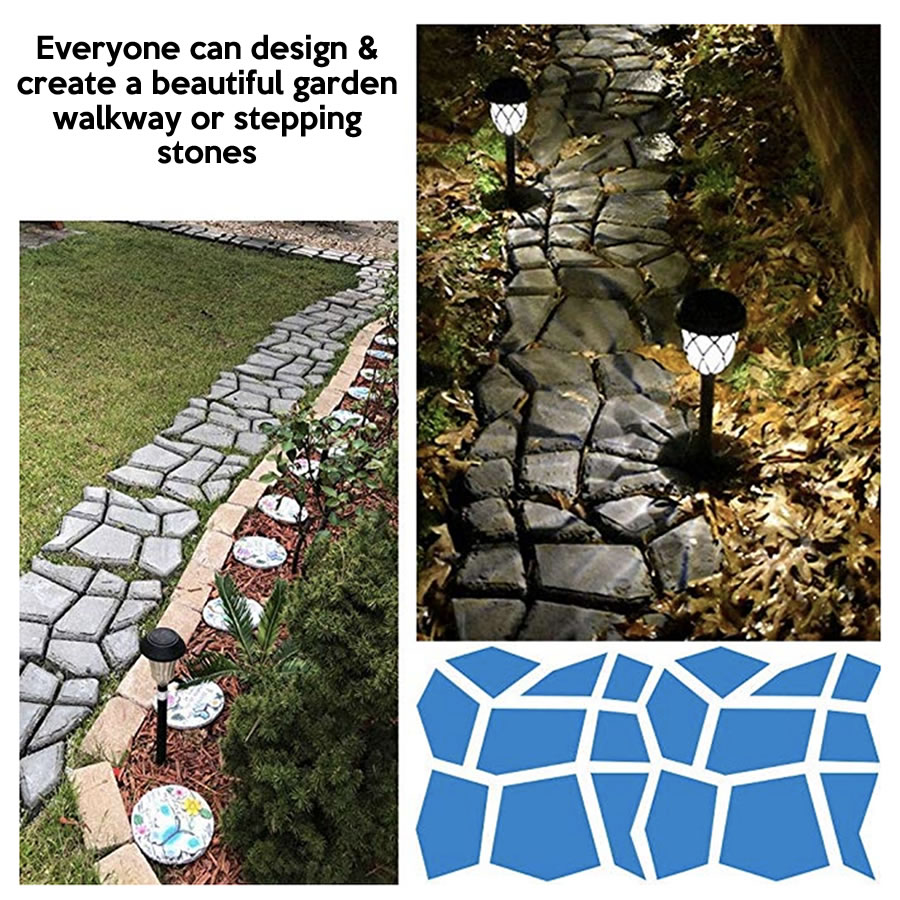
Irregular stepping stones excel at creating garden pathways that feel like natural discoveries rather than imposed infrastructure. These pathways can meander through planted areas, follow natural contours, and create the impression that they evolved organically over time. The irregular shapes enable pathway curves and direction changes that would be difficult or impossible with geometric pavers.
2. Water Feature Integration
The organic shapes of irregular pavers make them ideal for integration with water features where natural appearance is essential. Whether creating stream crossings, pond borders, or fountain surrounds, irregular shapes can follow water's natural contours while providing stable surfaces that feel like natural stone formations.
3. Woodland and Shade Garden Applications
In shaded areas where formal geometric patterns might feel inappropriate, irregular stepping stones create perfect transitions between planted areas and functional pathways. These applications work particularly well under tree canopies where dappled light creates natural patterns that complement organic paver shapes.
4. Rock Garden and Alpine Settings
Irregular pavers integrate seamlessly with rock gardens and alpine plantings where natural stone appearance is essential for authentic compositions. The varied shapes can follow terrain contours while providing access through delicate planted areas without overwhelming natural character.
5. Cottage Garden and Informal Landscape Design
Cottage gardens and informal landscape styles benefit from irregular paving that complements relaxed planting schemes and natural design approaches. The organic shapes support informal design philosophies while providing practical circulation solutions.
6. Zen Garden and Meditative Spaces
The calming effect of organic, irregular patterns makes them particularly suitable for meditation gardens and contemplative spaces where psychological comfort and natural connection matter more than architectural formality. Irregular stepping stones can create meditative pathways that encourage slow, mindful movement.
7. Children's Play Areas and Family Gardens
The playful, organic nature of irregular stepping stones appeals to children while creating safe, stable surfaces for active play. The varied shapes can create hopscotch patterns, adventure trails, or imaginative play elements that combine function with fun.
Design Principles for Organic Pattern Success
Composition and Flow in Irregular Layouts
Creating successful irregular paving installations requires understanding composition principles that differ fundamentally from geometric design approaches. These organic composition principles focus on creating visual flow and natural rhythm rather than mathematical precision and systematic repetition.
Natural clustering mimics how stones arrange themselves in natural environments, with groupings that create visual anchors while enabling flowing transitions between areas. Understanding natural clustering principles enables creation of irregular installations that feel spontaneous while maintaining underlying compositional structure.
Pathway flow in irregular installations should follow natural movement patterns rather than forced geometric alignments. The stepping stones should guide movement naturally while accommodating comfortable walking rhythms and natural direction changes.
Visual weight distribution in organic compositions considers how different irregular shapes create varying visual impact. Larger, darker, or more textured stones carry more visual weight and can serve as focal points within larger compositions.
Transition techniques between irregular paving and other landscape elements require understanding how organic patterns relate to planted areas, water features, and architectural elements. Successful transitions feel seamless rather than abrupt.
Color and Texture Harmony
Color relationships in irregular installations can enhance natural character while creating visual cohesion across varied shapes and sizes. Understanding how colors work within organic compositions enables creation of installations that feel naturally harmonious rather than artificially coordinated.
Natural color progressions follow patterns found in natural stone formations, with subtle variations that create visual interest without disrupting overall harmony. These progressions might follow geological principles or seasonal color changes found in natural environments.
Texture relationships become particularly important in irregular installations because the varied shapes create different light and shadow patterns throughout the day. Understanding how textures interact with irregular forms enables creation of surfaces that remain visually interesting under changing lighting conditions.
Weathering anticipation considers how different colors and textures will age and develop character over time. Quality irregular installations are designed to improve with age as natural weathering processes enhance their authentic appearance.
Professional Installation Techniques for Organic Patterns
Site Analysis and Natural Integration
Successful irregular paving installation begins with careful site analysis that identifies natural features, drainage patterns, and existing landscape elements that should influence the organic design. This analysis enables installations that feel genuinely connected to their environments rather than imposed upon them.
Topographic considerations include understanding how irregular patterns can follow natural contours while maintaining functional performance. Unlike geometric patterns that often require extensive site modification, irregular patterns can adapt to existing conditions while enhancing natural character.
Existing vegetation relationships require understanding how irregular paving can integrate with established plantings without disrupting root systems or natural growth patterns. Organic patterns excel at working around existing features that geometric patterns might require removing.
Drainage integration must consider how irregular shapes affect water flow patterns while ensuring adequate surface drainage. The varied shapes can create interesting drainage solutions that enhance rather than compromise natural water management.
Microclimate considerations include understanding how irregular patterns affect local environmental conditions and how they can enhance or complement existing microclimates within the landscape.
Organic Layout Strategies
Layout techniques for irregular patterns differ fundamentally from geometric approaches because they emphasize natural relationships rather than mathematical precision. These techniques require developing an eye for natural composition while maintaining functional performance standards.
Random placement strategies create naturalistic arrangements while avoiding obvious patterns that would compromise organic character. True randomness rarely creates satisfying compositions, so controlled randomness techniques guide placement decisions while maintaining spontaneous appearance.
Focal point development in organic compositions identifies natural locations for emphasis stones or special features that anchor the composition while maintaining natural character. These focal points emerge from the composition rather than being imposed upon it.
Flow continuity ensures that irregular stepping stone arrangements guide movement naturally while accommodating comfortable walking patterns. The stones should feel naturally placed while providing safe, stable walking surfaces.
Visual rhythm creation in organic compositions uses varied spacing, sizing, and orientation to create natural rhythm patterns that feel spontaneous while maintaining underlying compositional structure.
Quality Control for Natural Appearance
Quality control in irregular installations focuses on maintaining natural character while ensuring functional performance. This requires different standards and techniques compared to geometric installations where mathematical precision provides clear quality measures.
Natural appearance verification involves stepping back regularly during installation to ensure the overall composition maintains organic character. Small adjustments during installation can prevent obviously artificial appearances that compromise natural effect.
Functional performance testing ensures that irregular arrangements provide adequate walking surfaces while maintaining safety standards. The organic shapes must work functionally while preserving their natural character.
Compositional balance assessment considers how the overall arrangement creates visual harmony while maintaining the spontaneous character that makes irregular patterns so appealing.
Troubleshooting and Common Challenges
Avoiding Artificial Randomness
One of the biggest challenges in irregular paving installation is avoiding patterns that appear artificially random rather than naturally organic. Understanding the difference between natural and artificial randomness enables creation of convincing organic compositions.
Recognizing artificial patterns involves understanding how human brains naturally create patterns even when attempting randomness. These artificial patterns often create obvious repetitions or forced variations that compromise natural appearance.
Natural grouping principles guide arrangement decisions that create convincing organic compositions. Natural arrangements follow underlying principles that create harmony within variation rather than pure randomness.
Scale relationship maintenance ensures that irregular arrangements maintain appropriate proportional relationships that support natural appearance rather than creating chaotic compositions.
Managing Functional Requirements
Irregular patterns must satisfy functional requirements while maintaining their organic character. Balancing these sometimes competing demands requires understanding how to optimize both performance and appearance.
Safety considerations include ensuring adequate walking surfaces while maintaining natural character. Irregular stones must provide stable footing without creating trip hazards that could compromise user safety.
Accessibility requirements may limit the degree of irregularity possible in some applications. Understanding how to incorporate accessibility features while maintaining organic character enables inclusive design solutions.
Maintenance access considerations ensure that irregular installations can be properly maintained without compromising their natural character. Access requirements must be integrated into organic compositions during planning phases.
Long-term Performance Issues
Irregular installations face unique long-term challenges that require proactive management to maintain both performance and appearance throughout their service lives.
Settlement patterns in irregular installations may differ from geometric patterns because the varied shapes distribute loads differently. Understanding these load patterns enables base preparation that prevents settlement problems.
Joint management in irregular installations requires techniques that preserve natural character while preventing weed growth and maintaining installation stability. The varied joint patterns require specialized maintenance approaches.
Replacement considerations must account for how individual irregular stones can be replaced without disrupting overall natural composition. Planning for future maintenance enables long-term preservation of organic character.
Creative Enhancement Techniques
Natural Aging and Weathering Effects
Accelerating natural aging processes can enhance the authentic appearance of irregular concrete pavers while creating surfaces that look like they've been in place for decades rather than recently installed.
Acid washing techniques can create subtle color variations and surface textures that simulate natural weathering processes. These treatments must be applied carefully to achieve natural-looking results without obvious artificial appearances.
Biological enhancement encourages moss and lichen growth that adds authentic natural character over time. Understanding how to create conditions favorable for beneficial biological growth enables installations that improve with age.
Staining techniques can simulate natural weathering patterns while adding depth and character to irregular surfaces. These techniques work best when they enhance existing surface variations rather than creating obvious artificial effects.
Integration with Plant Materials
The relationship between irregular paving and surrounding plantings significantly affects overall natural character. Understanding how to integrate pavers with plant materials enables unified landscape compositions.
Ground cover integration allows low-growing plants to soften paver edges while creating natural transitions between paved and planted areas. These plants should enhance rather than hide the irregular paver characteristics.
Seasonal interest considerations include selecting plants that provide year-round visual interest while complementing the natural character of irregular paving installations.
Maintenance compatibility ensures that plant selections work well with paver maintenance requirements while supporting long-term composition success.
Innovation and Future Trends
Sustainable Materials and Eco-Friendly Options
Environmental consciousness drives innovation in irregular paving materials and production methods that reduce environmental impact while maintaining aesthetic and performance standards.
Recycled content integration utilizes post-consumer materials in concrete formulations that maintain performance while supporting sustainability goals. These materials often enhance rather than compromise irregular paver characteristics.
Permeable technology integration addresses stormwater management requirements while maintaining the natural character that makes irregular paving so appealing. Advanced permeable systems can support environmental goals without compromising aesthetic success.
Bio-based materials offer renewable alternatives to traditional mould materials while maintaining the performance characteristics needed for quality irregular paver production.
Carbon footprint reduction through local material sourcing and efficient production methods supports environmental stewardship while often providing economic benefits that make irregular paving more accessible.
Technological Integration
Emerging technologies enhance irregular paving capabilities while maintaining the natural character that defines this design approach.
3D printing technology enables creation of custom irregular moulds that capture specific natural features or create unique artistic interpretations of organic forms. This technology could make custom irregular patterns accessible for specialized applications.
Digital design tools help plan irregular installations while visualizing how different arrangements will appear before installation begins. These tools can optimize natural character while ensuring functional performance.
Smart materials might enable irregular pavers that respond to environmental conditions while maintaining their natural appearance. These materials could provide enhanced performance without compromising organic character.
Economic Considerations and Value Creation
Cost-Effectiveness Analysis
Irregular paving mould systems offer economic advantages that extend beyond simple material cost savings to include reduced installation complexity and enhanced long-term value.
Installation efficiency benefits from the adaptable nature of irregular patterns that can accommodate site conditions without extensive modification. This adaptability often reduces site preparation costs while enabling successful installations in challenging locations.
Material optimization through efficient use of irregular shapes can reduce waste while creating distinctive installations that distinguish properties from standard geometric paving applications.
Long-term value creation results from the timeless appeal and superior integration characteristics of irregular installations. The natural character often provides lasting appeal that maintains value better than trend-dependent geometric patterns.
Market Differentiation
Irregular paving creates unique value propositions that distinguish properties while appealing to buyers seeking natural character and environmental connection.
Design uniqueness appeals to buyers seeking distinctive landscape features that reflect personal style while maintaining broad market appeal. Irregular installations provide uniqueness without limiting market accessibility.
Environmental consciousness increasingly influences buyer preferences, making natural-character installations attractive to environmentally aware purchasers seeking properties that reflect their values.
Lifestyle compatibility of irregular paving appeals to buyers seeking outdoor spaces that support relaxed, nature-connected lifestyles rather than formal entertaining or display-oriented uses.
Conclusion
The world of irregular paving moulds represents a beautiful rebellion against the geometric constraints that often dominate landscape design, offering pathways to outdoor spaces that feel as naturally evolved as forest floors and as organically beautiful as weathered stone formations. These remarkable tools don't just create pavers – they unlock creative possibilities that celebrate the inherent beauty of controlled chaos and organic variation.
What makes irregular paving truly transformative extends far beyond its obvious aesthetic appeal. It's the way these organic patterns reconnect us with natural rhythms and remind us that perfection isn't always found in straight lines and perfect angles. When you choose irregular moulds, you're not just making a design decision – you're embracing a philosophy that values natural beauty over artificial perfection, creating outdoor spaces that feel like personal sanctuaries rather than outdoor showrooms.
The journey from concrete mixture to naturalistic stepping stone installation requires patience, artistic sensitivity, and a willingness to let go of rigid control in favor of guided spontaneity. But the rewards extend far beyond the immediate visual impact. You're developing an appreciation for natural composition principles that will influence how you see and create beauty throughout your life, building skills that bridge art and craft, and creating outdoor spaces that provide daily reminders of nature's subtle wisdom.
Remember, every stunning irregular installation began with someone who recognized that true beauty often emerges from embracing imperfection rather than pursuing geometric perfection. Your organic adventure starts with choosing quality moulds, understanding natural composition principles, and trusting in the beauty that emerges when human creativity works in harmony with nature's irregular rhythms. Make every stone placement count, learn from each organic composition, and don't hesitate to explore the endless creative possibilities that irregular paving offers. The most memorable outdoor spaces often come from the courage to embrace nature's beautiful chaos, brought to life one organically perfect imperfection at a time.
Can you use the moulds to make circles, gentle curves, etc. ?
Yes you can....if you do some pre-work first and lay out the borders with bricks this will give you a visual to work within.
You could also dig small trenches where the border bricks were and fill in the space with small landscape pebble to keep the border.
How much concrete does it take to fill one mould?
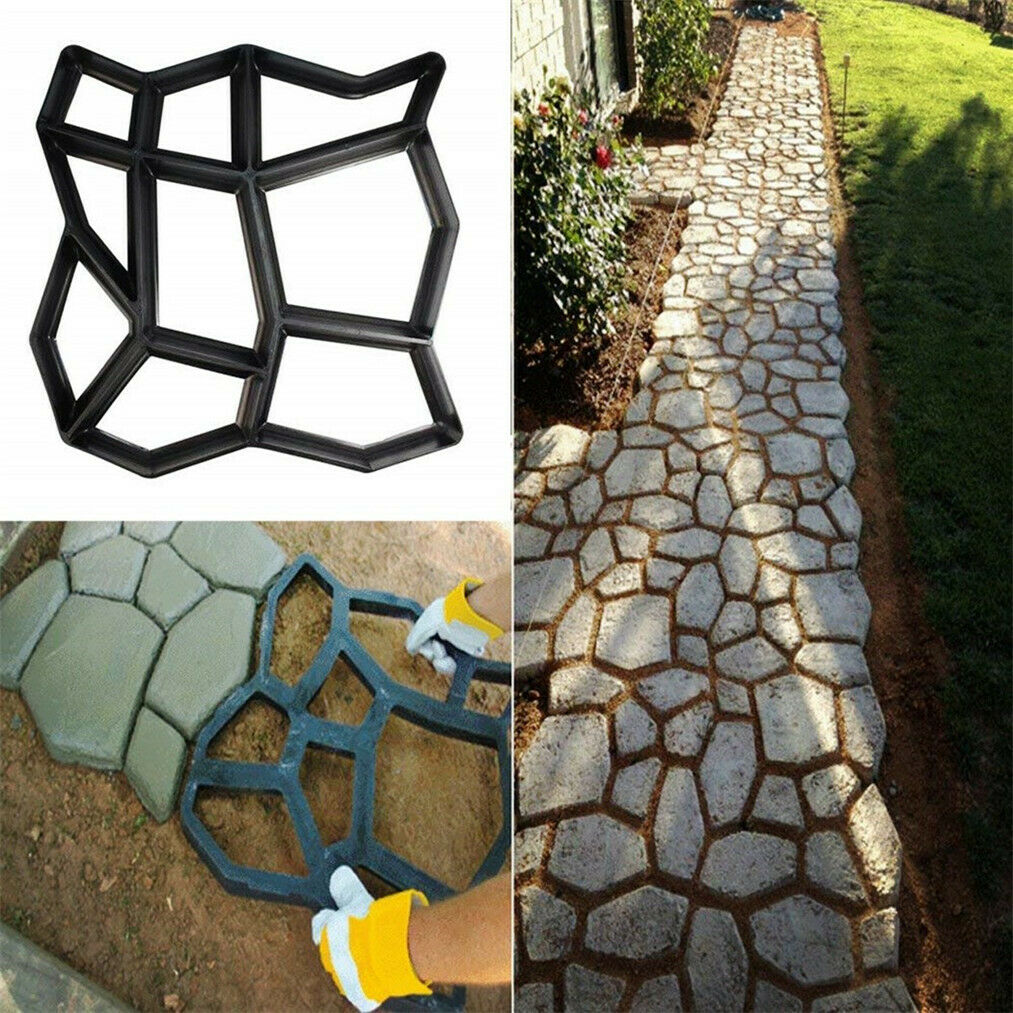
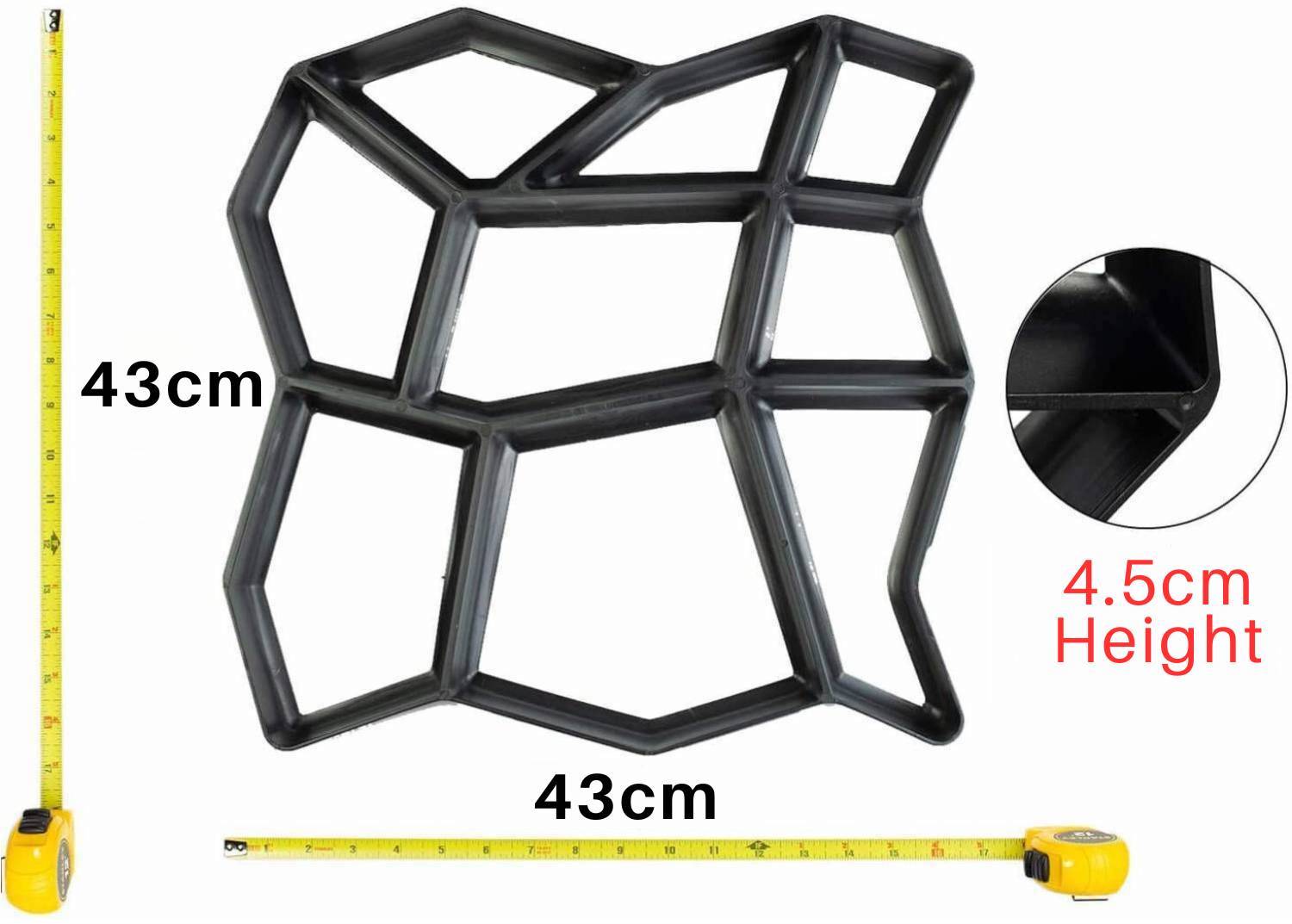
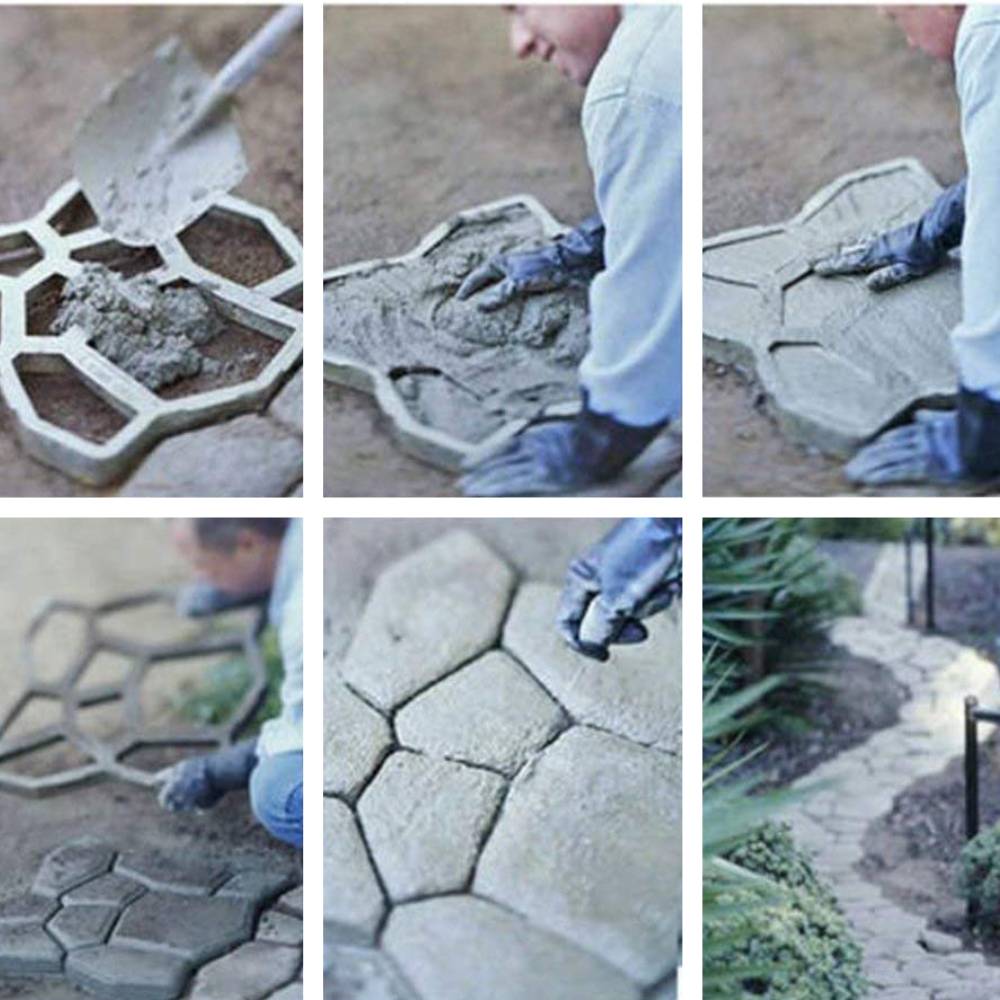
About 13.8 pounds concrete (3.45 lb. cement + 10.35 lb. sand).
How long does the concrete have to set before removing the mould to do another?
That would depend on the type of concrete you purchase and how you mix it. Generally speaking you can move the mold after about 2 - 3 minutes to the next stamp area.
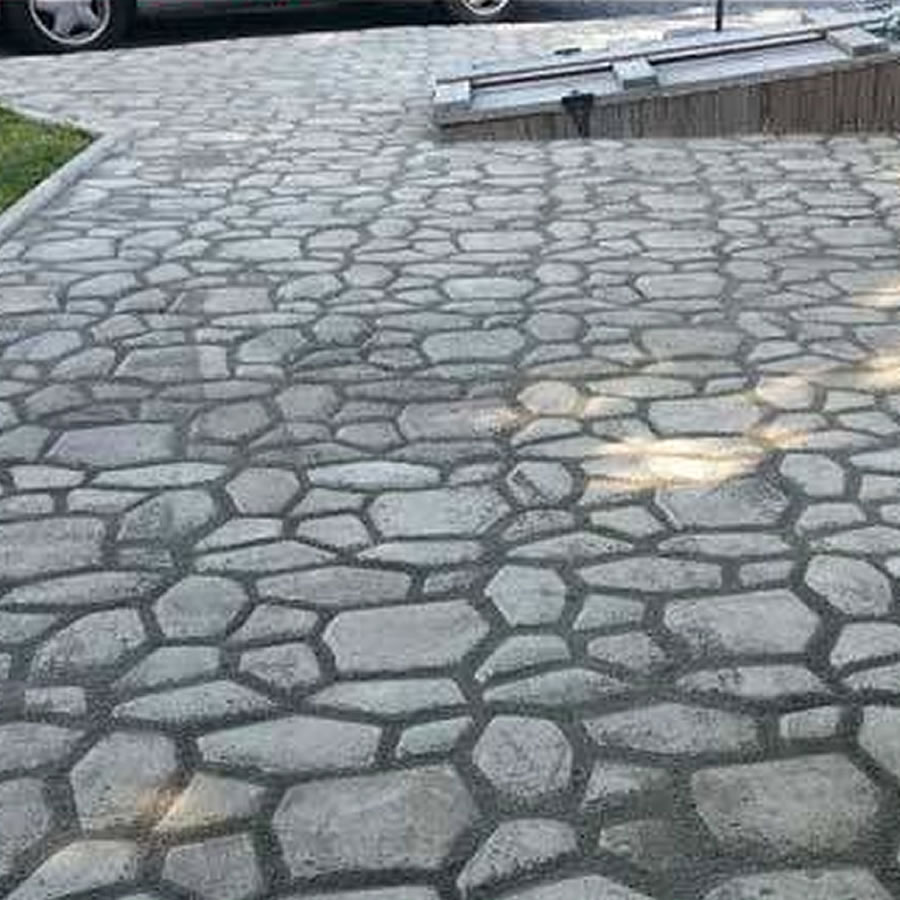
Can you do a driveway with this? Wondering if the weight of vehicles could easily shift or crack the concrete after awhile?
Yes you could.
With that said these moulds are more for landscaping or stepping stones.
What do you use for the fill in the gaps with?
You can fill the gaps with soil and then put some grass on it. Sand and small gravel is another alternative.
Can the moulds be rotated so that the pattern is less uniform?
Yes, you can rotate this mould to create your own unique patterns.
If you like the random style, you can make the pattern not uniform.
If you like the uniform style, you can also create a uniformed pattern with it.
What do you mean by irregular shape?
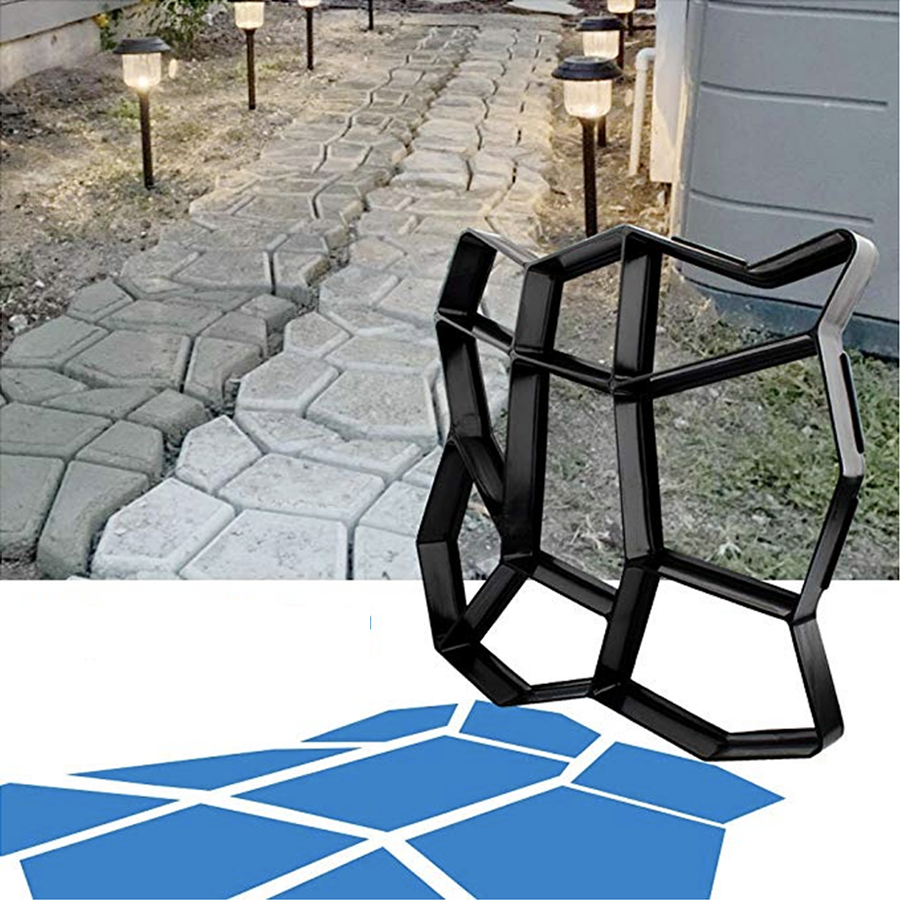
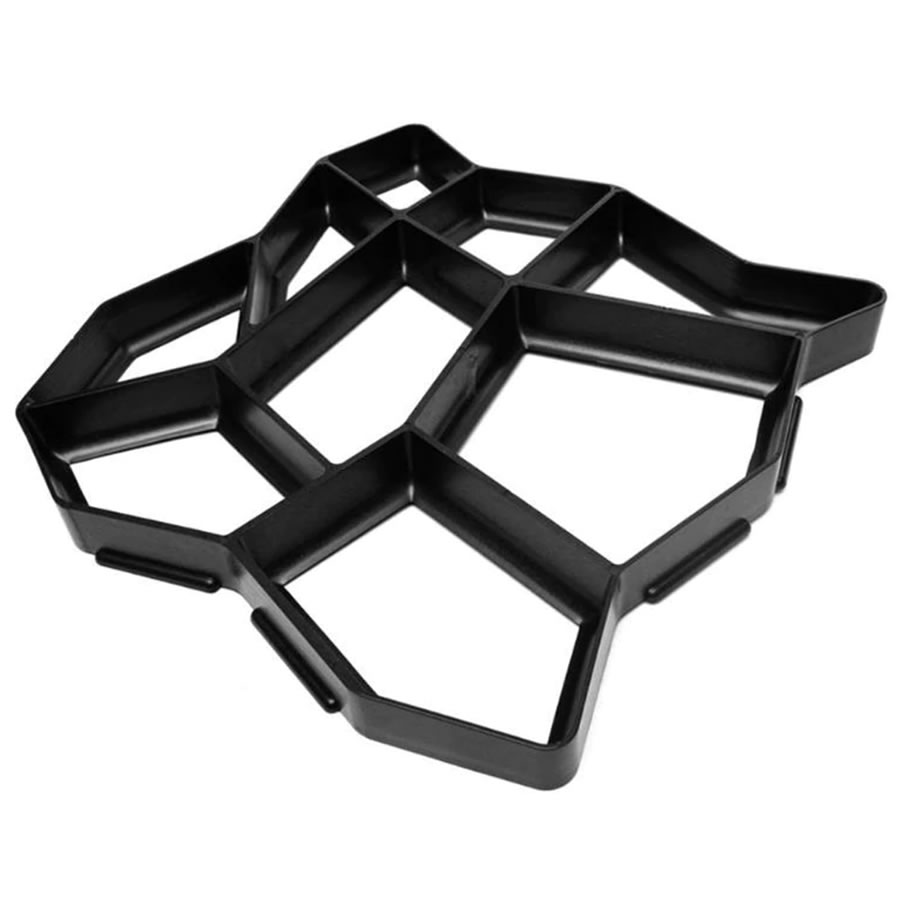
The irregular shape mould simply means the pattern of this mould is random, and the shape of it is not square
How would you color these if you wanted each different shape a different color? Sand? concrete pigment?
There are many ways you can change the color of the concrete. Here is a few ideas.
Pigment: you will have to mix the pigment with the concrete that means if you want different colors in each stone you will need multiple mixing buckets. You will need to be very patient with this process because when you screed it you will end up mixing the colors together.
Dye: this is an application that can be painted or sprayed on. You will more than likely need to seal it which can make the concrete mildly slippery when wet.
Paint: oil based paint is also an option you would not want to use latex because it will peel. Oil based paint come in quarts gallons as well as inside a spray can probably not going to be the long lasting result you're looking for but it should hold up for 2 to 3 Seasons.